TL;DR
- A direct booking website works best on your own domain, with a page for every property.
- The booking engine should only handle availability and payment. Guests browse and decide on your site, then click through to book.
- A clear direct offer gives guests a reason to skip Airbnb and Booking.com. The company used 10% off, plus 5% more for following it on Instagram.
- Track results with GA4 and Search Console, and compare direct bookings before and after.
A direct booking website works best when it's your own website on your own domain, with a page for every property, and a booking engine that only handles availability and payment. Guests browse and decide on your site, then click "Book direct" to reach the booking engine, and a clear direct offer gives them a reason to skip Airbnb and Booking.com.
This guide is for short-let and holiday rental managers who already use a booking engine such as Guesty and want guests to book with them rather than through an OTA. It's based on how a luxury villa management company in Bali set up its direct booking website while I freelanced for them on marketing and operations, what I'd do differently, and what I'd do first if I were starting from zero.
What a direct booking website needs
There are four parts, and each one has a different job:
- Your own website on your own domain. This is where guests browse, and where Google finds you. If your only web presence is the booking engine's default address, read why your booking engine isn't helping your Google rankings first.
- A page for every property or collection. Each page has your own description, photos, videos and every detail a guest might need.
- A booking engine for availability and payment. It does the part it's good at, and nothing else.
- A reason to book direct, and a way to measure it. An offer guests can see, and tracking that shows whether it works.
How to set up a direct booking website, step by step
- Choose what you'll build the website on. This decision is harder to undo than it looks. If you manage more than a handful of properties, or you plan to run a blog, pick a platform with a CMS (a content management system, where every property is an entry in a list rather than a hand-built page). I explain how I'd choose in which vacation rental website builder to use.
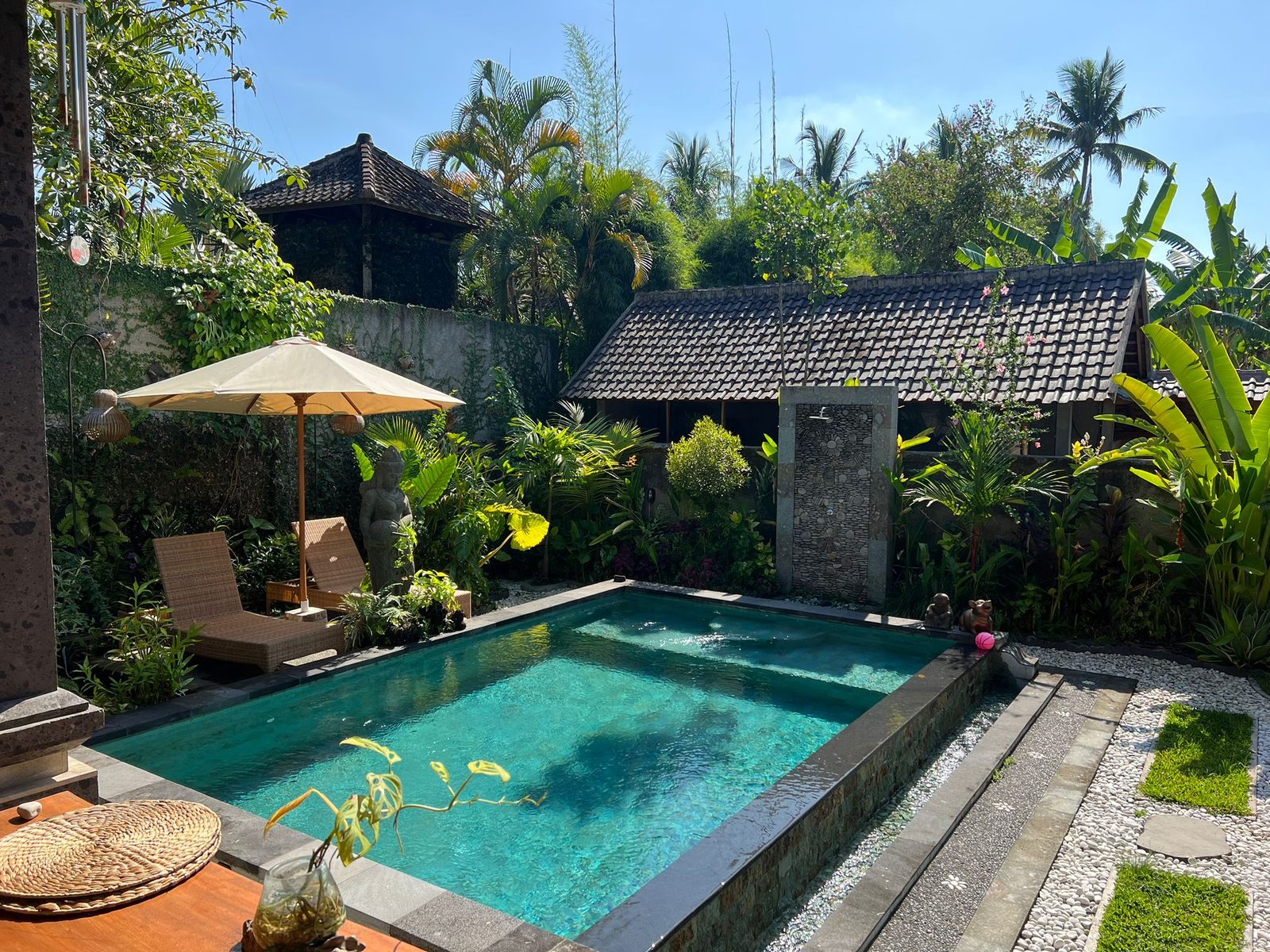
- Build a page for every property. For the Bali villa company, each villa had its own page with its own descriptions and photos. Every page carried links to the places the villa could be booked, including Airbnb, Booking.com and other OTAs, plus Google Maps and the company's direct booking option. The aim was that guests found everything on its website first, whichever channel they ended up booking on.
- Connect your booking engine to your own domain. Most booking engines let you use an address like book.yourdomain.com by adding a DNS record. For the company this was smooth and quick. Guesty's own guide walks through it, and says the security certificate is added automatically.
- Link each property page to its own booking page. The "Book direct" button on each villa page took the guest straight to that villa in the Guesty booking engine, rather than to a general search page. Guests browsed on the company's site and only left it to pay.
- Add a direct booking offer and show it everywhere. More on this below.
- Make it findable. Original property and area pages, a blog split into guest content and owner content, a complete Google Business Profile and regular reviews. None of this works if the pages only repeat your OTA descriptions.
- Set up tracking before you launch. The company used Google Analytics 4 and Google Search Console. To see whether direct bookings were really going up, the company compared the booking reports in its property management software from before and after the new site, alongside what the website data showed.
If I were starting from zero: I wouldn't build on the website that came with the booking software. I'd build my own website on a platform I could edit freely, as the company eventually did on Webflow, and connect it to the booking engine. The company started on the software provider's built-in website and had to rebuild later.
Want a second pair of eyes on your direct booking setup?
I'll send you a short, free review of your website and booking setup.
Get Your Free AuditThe direct booking offer that worked for them
Guests need a clear reason to book on your site instead of a platform they already trust. The company used a two-step offer:
- 10% off for booking direct. This was the main offer.
- An extra 5% off for following the company on Instagram. Guests received a discount code when they clicked follow.
The offer was advertised on the company's social media and on the website, and mentioned it everywhere the business appeared online. The Instagram step gave guests a reason to follow the company as well as a reason to book. Before you copy any percentage, compare the discount with what an OTA booking costs you in commission, and check the offer still leaves you with a healthy margin.
The results came from the whole system, not the discount alone. Organic traffic grew 131% and ranking keywords rose 59% after the company moved to its own site, and regular social posting sent people there, where the offer did the convincing. The full story is in the Bali villa management case study.
Mistakes to avoid
Choosing the wrong website platform first
The most expensive mistake I've seen is picking a platform that suits a five-page site, then outgrowing it. Businesses end up paying extra for upgrades when they add a blog, or when they grow so much that someone has to build a new page by hand for every new property and then add it to the main property page. A platform with a CMS removes this: once it's set up properly, adding a property is filling in a form, and the listing pages update themselves.
Relying on the booking software's default website
The built-in website is fine to start with, but it's often limited, template-led and hard for the team to change. It can also tie your website to one booking provider. I cover this in the website builder comparison.
Copying your OTA descriptions
If your property pages repeat what's already on Airbnb and Booking.com, Google has little reason to show them. Write what only you know, as explained in the booking engine SEO guide.
Hiding the offer
If guests can't see the direct booking offer on the page where they decide, it won't change their decision. Put it near the "Book direct" button as well as in your social posts.
Frequently asked questions
How do I set up a direct booking website for a holiday let?
Build your own website on your own domain, give every property its own page with original content, connect your booking engine to your domain or a subdomain, link each page's "Book direct" button to the right property, add a visible direct booking offer, and set up Google Analytics 4 and Google Search Console to track results.
Do I need my own website if my booking software provides one?
You can start with the provider's website, but it's often limited and tied to that provider. If you want a blog, many property pages and full control over design, a website you own and can edit freely is usually the better long-term choice.
How much does a direct booking website cost?
It depends on the platform and whether you hire a developer. As one example, Guesty's basic website is free on a Guesty subdomain, a custom domain adds $15 a month, and its Advanced Website is $49 a month plus 0.5% of direct booking volume (Guesty billing). Other platforms charge their own plan fees, so check current pricing before you decide.
What discount should I offer for booking direct?
There's no single right number. The company offered 10% off, with an extra 5% for following it on Instagram. Work out what an OTA booking costs you in commission first, so the discount still leaves you better off.
Can I connect my booking engine to my own domain?
Usually yes. Guesty, Hostaway, Hostify and Lodgify all let you use your own domain or a subdomain, and the company's Guesty connection was quick. The booking engine SEO guide explains each platform's setup.
How do I track direct bookings?
Use Google Analytics 4 and Google Search Console for website activity, and compare your property management software's reports from before and after the new site to see direct bookings change. Run a test booking from start to finish before you rely on any numbers.
Do I need a developer?
It helps for the first build. The company hired a web developer to set up the site and CMS, and after the template was in place, anyone on the team could add villas and edit pages.
How long does it take to see results?
Usually months rather than weeks. For the Bali company, rankings grew steadily over a couple of months of publishing and optimising before the change was clearly visible in Search Console and in direct bookings.
Want a second pair of eyes on your direct booking setup?
I'll send you a short, free review of your website and booking setup.
See the results this approach got for a villa manager: read the case study.
Get Your Free AuditSources

Ayisha Jose
SEO and AEO specialist for property managers. I help property and vacation rental managers rank on Google, get cited by AI, and win more direct bookings. I have freelanced on marketing and operations for a Bali villa management company.